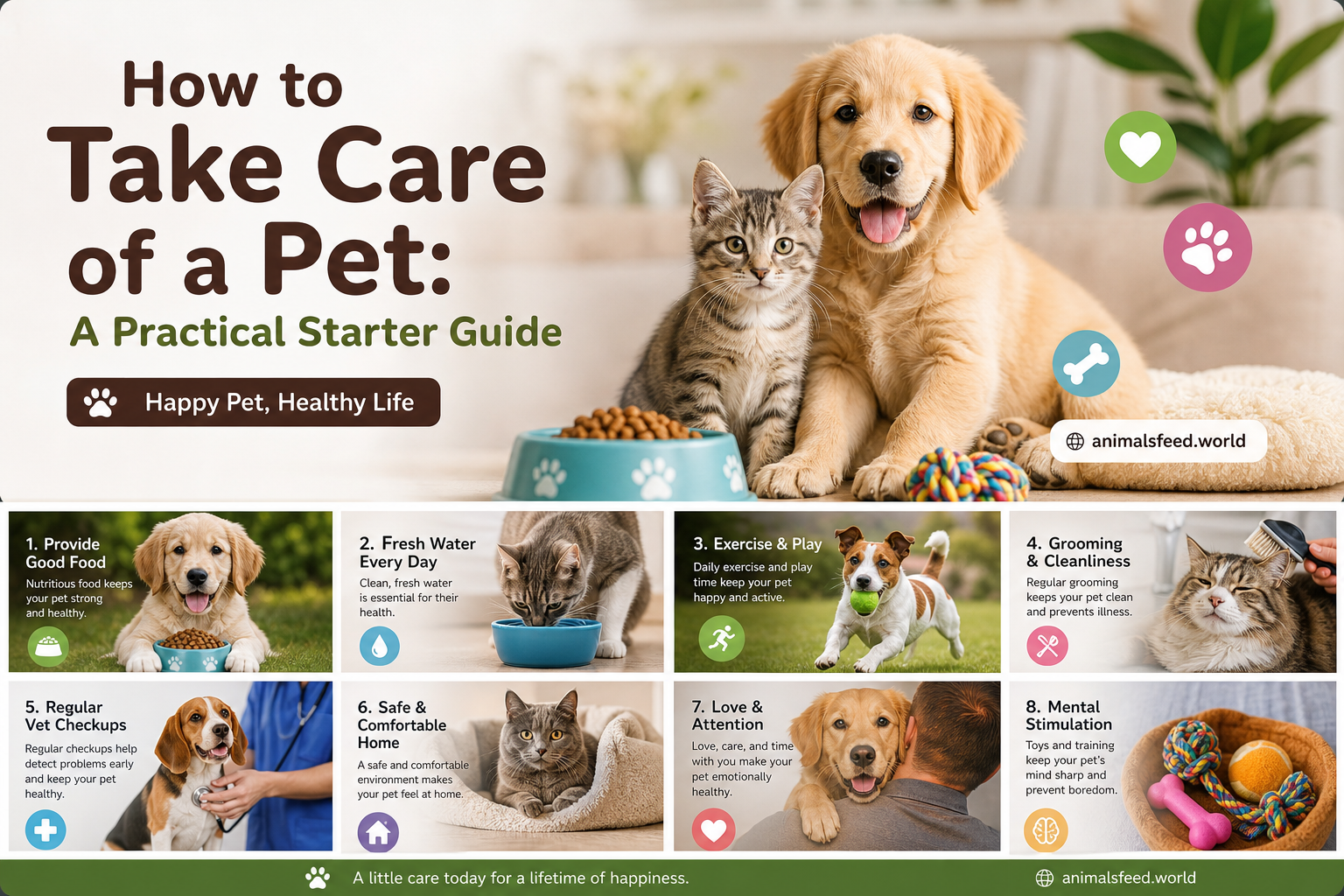
How to Take Care of a Pet: A Practical Starter Guide
Bringing a pet home takes about ten minutes of excitement and a decade or more of routine. Knowing how to take care of a pet comes down to six things: the right food, clean water, regular vet care, exercise, a safe home, and close attention to changes in behaviour. Get those right and most problems never get started. This guide covers each one with specifics you can use this week.
What does a pet need every day?
Every pet needs a balanced diet, fresh water, a clean and safe place to rest, physical activity, and time with you. Miss one of these regularly and health or behaviour usually pays for it.
- Food: a complete diet made for your pet’s species and life stage.
- Water: fresh, clean and always within reach.
- Shelter: a quiet, draught-free spot that belongs to them.
- Movement: walks, play, climbing or supervised time out of the cage, depending on the animal.
- Company: even independent animals like cats notice when you’re never around.
- Observation: a two-minute daily look at appetite, energy, coat and toilet habits.
What should you feed your pet?
Feed a complete and balanced food designed for your pet’s species, size and age. A puppy, an adult cat and a senior rabbit have different needs, and a single bag of “general” food rarely suits all three.
Check the label for a statement that the food is complete and balanced. In the United States that usually refers to AAFCO nutritional standards. Cats are obligate carnivores, so they shouldn’t live on dog food, which lacks nutrients they require. Rabbits and guinea pigs need constant access to hay, because it keeps their digestion and teeth in working order.
Measure portions. Guessing is how most pets end up overweight, and excess weight is one of the most common and preventable health problems vets see. Keep treats to a small share of the daily diet (many vets suggest no more than about 10%), and switch foods gradually over seven to ten days to avoid an upset stomach.
Some human foods are genuinely dangerous. Keep these away from your pet:
| Food | Mainly affects | Why it’s a problem |
| Chocolate | Dogs and cats | Contains theobromine, which affects the heart and nervous system. |
| Grapes and raisins | Dogs | Can cause kidney failure, even in small amounts. |
| Xylitol (sweetener) | Dogs | Found in sugar-free gum and baked goods; can cause a sudden drop in blood sugar and liver damage. |
| Onions and garlic | Dogs and cats | Can damage red blood cells and cause anaemia. |
| Macadamia nuts | Dogs | Can cause weakness, vomiting and tremors. |
| Alcohol and caffeine | All pets | Even small amounts can be toxic given a pet’s body size. |
Wash food and water bowls daily. Stale water and crusted food bowls are an easy, avoidable source of bacteria.
How often should a pet see the vet?
Most healthy adult dogs and cats should see a vet once a year. Young animals need more visits for their vaccination series, and senior pets often do better with a check-up every six months, because age-related problems are easier to treat when caught early.
A good vet relationship covers four things:
- Vaccinations: core vaccines for dogs typically include rabies, distemper, parvovirus and adenovirus. Cats typically receive rabies and the FVRCP combination. Rabies vaccination is required by law for dogs in most US states, so check your local rules.
- Parasite prevention: fleas, ticks, worms and, for dogs in many regions, heartworm. Your vet will recommend products that suit your area and your pet.
- Spaying or neutering: talk through the right timing for your pet’s breed and size.
- Microchipping: a chip only helps if your contact details are registered and current, so update them whenever you move or change your phone number.
Find an emergency vet before you need one. Save the number in your phone and know the route. At 2 a.m. with a distressed animal, you won’t want to be searching.
How much exercise and mental stimulation does a pet need?
Most pets need daily physical activity and something to occupy their minds. The amount depends on species, breed and age: a young border collie needs far more than an elderly pug, and a cat needs very different stimulation from a dog.
Dogs generally need daily walks plus time to sniff, explore and play. Cats do well with a couple of short play sessions each day using a wand toy, plus a scratching post and a window perch. Rabbits need daily time outside their hutch in a safe, enclosed space where they can run, and pet birds need regular supervised time out of the cage.
Boredom rarely looks like boredom. It looks like chewing furniture, barking, digging, over-grooming or sudden aggression. Puzzle feeders, short training sessions using rewards, and rotating toys give a bored animal a legitimate outlet. Reward-based training also builds trust, and that makes every vet visit and grooming session easier.
How do you groom and keep a pet clean?
Grooming is a health check as much as a cosmetic routine. Brush regularly, trim nails when needed, look at ears and teeth, and bathe only when your pet is actually dirty.
- Brushing: short-haired pets may need it weekly; long-haired breeds often need it daily to prevent painful mats.
- Nails: overgrown nails can affect how an animal walks. If you hear clicking on hard floors, they’re probably due a trim.
- Ears and eyes: wipe away visible dirt gently. Redness, a bad smell or discharge needs a vet.
- Teeth: dental disease is very common in dogs and cats. Brush with pet-safe toothpaste, never human toothpaste, and ask your vet about dental care at each check-up.
- Bathing: use pet shampoo. Bathing too often can dry out the skin.
While you groom, run your hands over your pet’s body. New lumps, sore spots or weight changes are far easier to notice when you’re touching your pet every week.
How do you make your home safe for a pet?
Look at your home from floor level. Pets chew, lick and swallow things you wouldn’t think twice about, so the safest approach is to remove or lock away anything that could harm them.
- Store cleaning products, antifreeze, rodent poison and medicines in closed cupboards.
- Never give human painkillers such as ibuprofen or paracetamol (acetaminophen) unless your vet tells you to. They can be seriously harmful to pets.
- Check your plants. Lilies are highly toxic to cats, and several common houseplants and garden plants can make dogs sick.
- Tidy cables, hair ties, string and small objects that can be chewed or swallowed.
- Secure windows, balconies and fences. Fit your pet with an ID tag and a microchip.
If you suspect poisoning, call your vet or an animal poison helpline immediately. In the United States, the ASPCA Animal Poison Control Center is available on (888) 426-4435, and a consultation fee may apply. Don’t induce vomiting unless a professional tells you to.
What are the early signs that a pet is unwell?
The earliest signs are usually small changes: eating less, drinking noticeably more, sleeping more, hiding, or toilet habits that look different. Animals instinctively hide pain, so by the time something looks obviously wrong, it has often been wrong for a while.
Contact your vet if you notice any of the following:
- Vomiting or diarrhoea lasting more than a day, or any blood in either
- Limping, stiffness or reluctance to jump or climb
- Weight loss or gain without a change in diet
- Persistent bad breath, drooling or difficulty eating
- New lumps, hair loss, scratching or sore skin
Some situations are emergencies. Go to an emergency vet straight away for difficulty breathing, collapse, seizures, suspected poisoning, or a male cat straining to pass urine with little or nothing coming out. That last one can become life-threatening within hours.
What does a good pet care routine look like?
A simple routine prevents most problems. Here is a framework you can adapt to your pet:
| Frequency | What to do |
| Daily | Feed measured portions, refresh water, exercise and play, quick health look, clean litter tray or cage. |
| Weekly | Brush coat, check ears, eyes and nails, wash bedding and toys, weigh small pets. |
| Monthly | Give parasite prevention as directed, check weight, deep-clean habitat or litter area. |
| Every year | Vet check-up, vaccination boosters, dental review, update microchip details. |
Does the same advice apply to livestock?
The principles carry over: species-appropriate nutrition, clean water, shelter, parasite control, vaccination and daily observation. The details change with the animal. Livestock owners should build a health plan with a local large-animal vet, because disease risks and vaccination schedules vary by region and species.
Feed matters more than people expect. Feed formulated for one species can be dangerous to another. Some cattle feeds, for example, contain additives that are toxic to horses. Check the label before you share anything between species, and walk your animals daily to catch limping, weight loss or changes in behaviour early.
Frequently asked questions
How do I take care of a pet for the first time?
Start with five basics: a complete and balanced diet suited to your pet’s species and age, fresh water every day, a registration with a local vet, a safe space to rest, and daily exercise and attention. Book a first vet visit within the first week so you can set up vaccinations, parasite prevention and a feeding plan.
How much should I feed my pet?
It depends on species, size, age and activity level. Use the feeding guide on the food label as a starting point, measure portions rather than guessing, and ask your vet to check your pet’s body condition. Adjust the amount if your pet gains or loses weight.
How often should a pet visit the vet?
Healthy adult dogs and cats generally need a check-up once a year. Puppies and kittens need several visits in their first months for vaccinations, and senior pets often benefit from check-ups every six months. Go sooner if you notice changes in appetite, energy, breathing or toilet habits.
Which human foods are dangerous for pets?
Chocolate, grapes and raisins, xylitol (a sweetener found in sugar-free products), onions, garlic, macadamia nuts, alcohol and caffeine can all harm pets. If your pet eats any of them, call your vet or an animal poison helpline straight away rather than waiting for symptoms.
How can I tell if my pet is healthy and happy?
A healthy pet usually has a steady appetite, bright eyes, a clean coat, normal energy for their age and regular toilet habits. Relaxed body language and an interest in play and company are good signs. Sudden changes in any of these are worth a call to your vet.
Where to start
Pick one thing and do it today. Book the vet check-up you’ve been putting off, or measure your pet’s dinner instead of guessing. Small habits compound, and a pet with a steady routine tends to be healthier and calmer. For more on nutrition, pet food and animal health, keep exploring the guides at AnimalsFeed.world.
Fact-check note
Health, vaccination and toxicity points reflect widely accepted veterinary guidance. Vaccine protocols, legal requirements and helpline details can change, so confirm them against your local vet and current official sources before publishing.