
Learn the 5 key indicators of dog health and wellness to keep your best friend feeling great. This guide shows you how to check their food, movement, and daily habits. You will get a clear plan to improve your pet’s life today.
Is your dog really healthy?
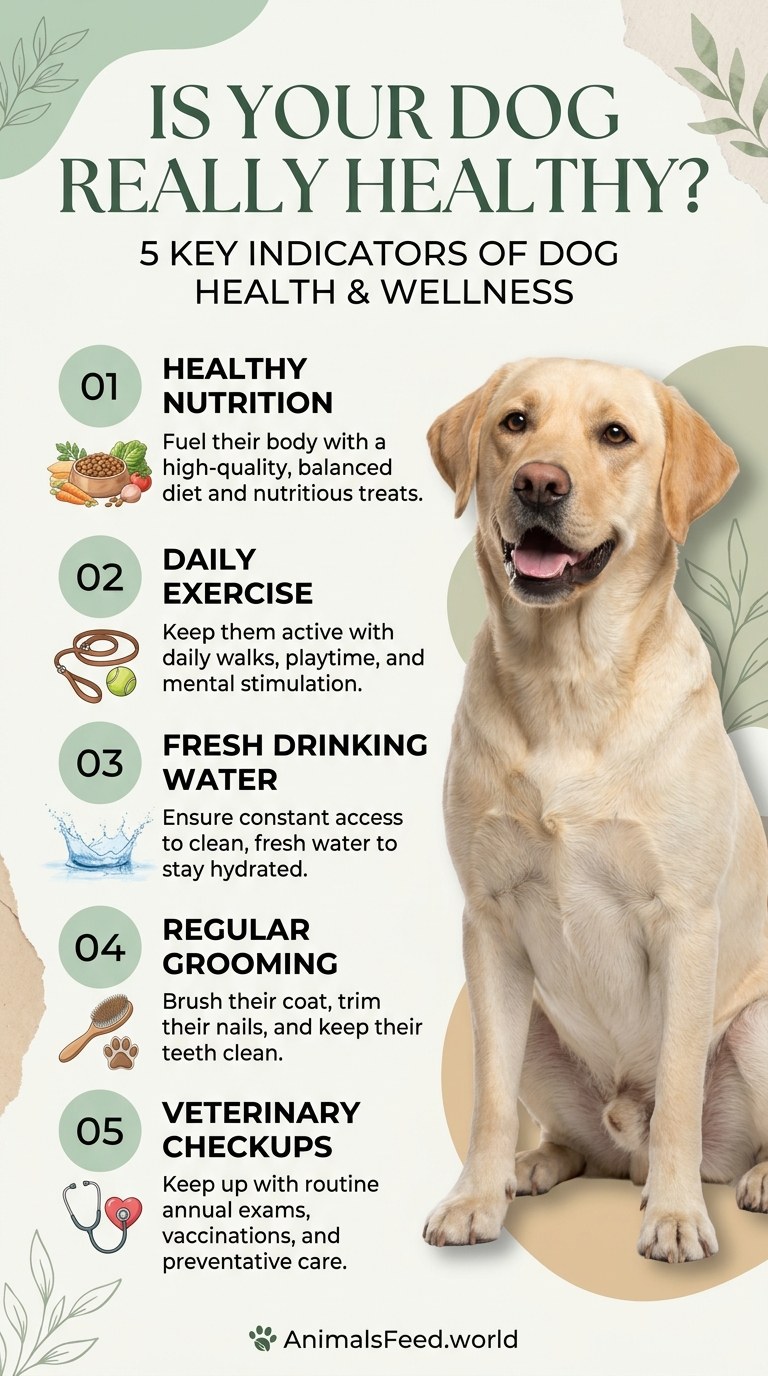
Every pet owner wants their dog to live a long and happy life. A healthy dog looks bright, stays active, and has a shiny coat. Looking at the picture, we see a happy yellow Labrador sitting tall with clear eyes and a pink tongue. This image represents the goal for all dog owners. To reach this state, you must focus on five specific areas of care that support their body and mind. It is not just about one thing, but a balance of several daily habits that make a difference over time.
When you look at the infographic, you see a clean and organized list of priorities. The soft green and beige colors in the background create a calm feeling. This reflects the peaceful life a healthy dog enjoys. By following a simple routine, you can ensure your dog stays in peak condition. You should look for these signs every day to catch any small changes before they become big problems. A healthy dog is a happy dog, and these steps make that possible for any breed.
Healthy Nutrition and Fresh Water
The first step on the list is nutrition. The picture shows a bowl of brown kibble surrounded by fresh carrots, lettuce, and tomatoes. This reminds us to fuel their body with high quality food. A balanced diet provides the energy they need to play and the nutrients to keep their skin healthy. It is helpful to look for foods that have real meat and vegetables as the main ingredients. Avoid fillers that do not add value to their health. Nutritious treats are also part of this plan, but they should be given in moderation.
- Choose a high quality food that matches your dog’s age and size.
- Include fresh vegetables like carrots for a healthy crunch.
- Measure portions to keep your dog at a healthy weight.
- Check the ingredient list for real proteins and vitamins.
- Keep treats small and use them for positive rewards.
Fresh drinking water is the third point in the image, showing a splash of clear blue water. Dogs need constant access to clean water to stay hydrated. This is vital for their digestion and kidney health. You should wash their water bowl every day to prevent bacteria from growing. If you are outside playing, always bring a portable water bottle. A well hydrated dog has more energy and can regulate their body temperature much better during warm weather.
Daily Exercise and Mental Stimulation
Exercise is the second key indicator shown in the picture. You can see a brown leather leash and a bright yellow tennis ball. These items represent the physical activity every dog needs. Daily walks are the most common way to get moving, but playtime is just as important. Running in the yard or playing fetch helps build strong muscles and keeps their heart healthy. The amount of exercise depends on the breed, but every dog needs at least some movement every single day to stay fit.
Mental stimulation is another part of daily exercise. This means giving your dog puzzles or teaching them new tricks to keep their brain busy. A bored dog can become stressed or start chewing on furniture. When you combine physical walks with mental games, your dog will be much calmer at home. The picture reminds us that exercise is not just a chore but a way to bond with our pets. Using toys like the yellow ball makes movement fun for both the owner and the animal.
Regular Grooming for a Clean Coat
The fourth section of the infographic highlights grooming. It shows a wooden hairbrush and a small brown paw print. Regular grooming is about more than just looking good. Brushing your dog removes loose hair and dirt, which prevents skin irritation. It also gives you a chance to check for any bumps or scratches on their skin. A clean coat feels better for the dog and keeps your home cleaner too. Most dogs enjoy the feeling of being brushed if you start the habit early in their life.
- Brush your dog’s coat at least twice a week to remove tangles.
- Trim their nails regularly so they do not click on the floor.
- Keep their teeth clean by using dog safe toothpaste or dental chews.
- Check their ears for any redness or unusual smells.
- Give them a bath with gentle soap when they get dirty or smelly.
The picture also mentions nail trimming and teeth cleaning. Long nails can be painful for a dog to walk on and may cause joint issues. Keeping their teeth clean prevents gum disease and bad breath. These small tasks might seem minor, but they are essential for long term wellness. If you are not comfortable trimming nails yourself, a professional groomer can help. Making grooming a positive experience with treats will help your dog stay relaxed during the process.
Veterinary Checkups and Preventative Care
The final indicator on the list is veterinary checkups. The icon shows a stethoscope and a red heart. This represents the medical side of pet care. Annual exams are necessary to catch health issues early. During these visits, the vet can check your dog’s heart, lungs, and weight. They will also give the necessary vaccinations to protect your pet from common diseases. Preventative care is often easier and cheaper than treating a sickness later on.
Routine care also includes protection against pests like fleas, ticks, and heartworms. Your vet can recommend the best products for your specific area. By keeping up with these appointments, you ensure your dog has a strong shield against illness. The happy Labrador in the image looks so vibrant because all these needs are being met. When you follow these five steps, you provide a complete foundation for your pet. You can feel confident that you are doing everything possible to keep your dog healthy and strong for years to come.